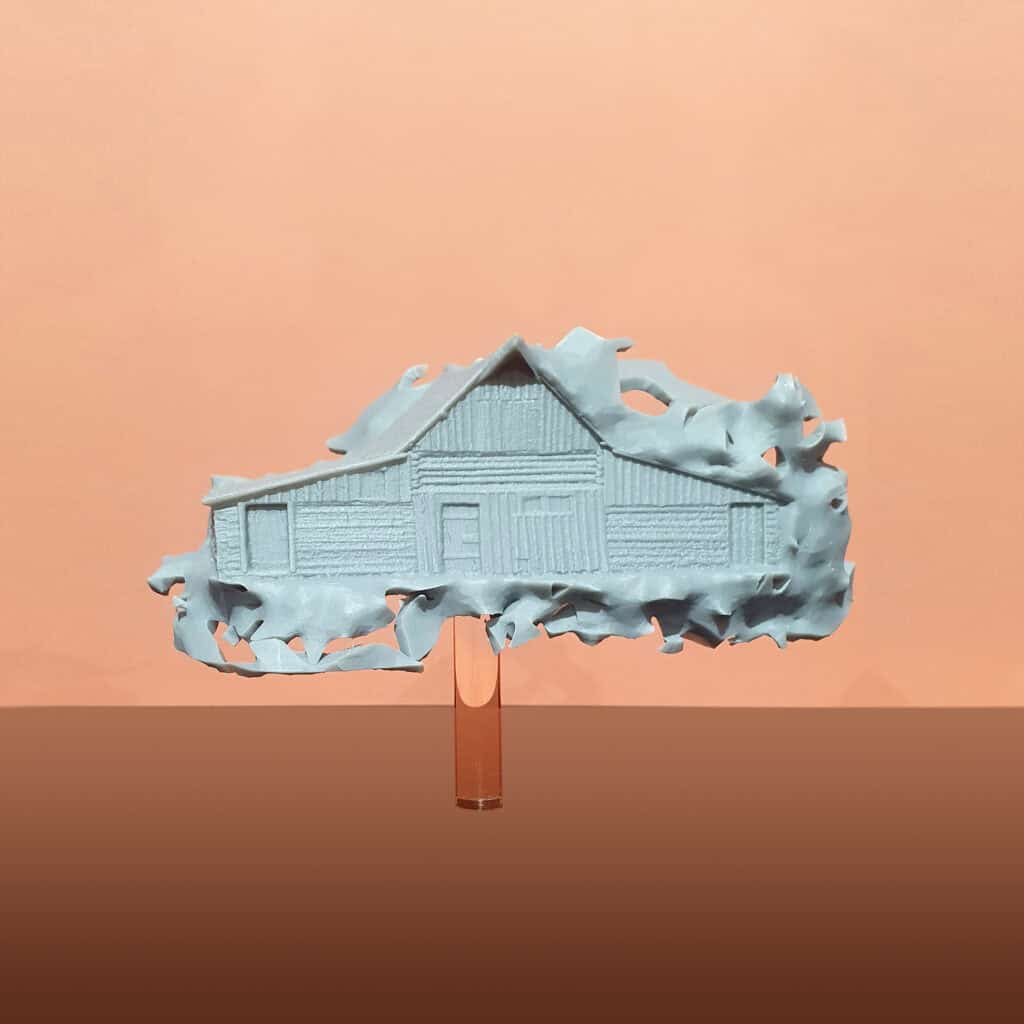
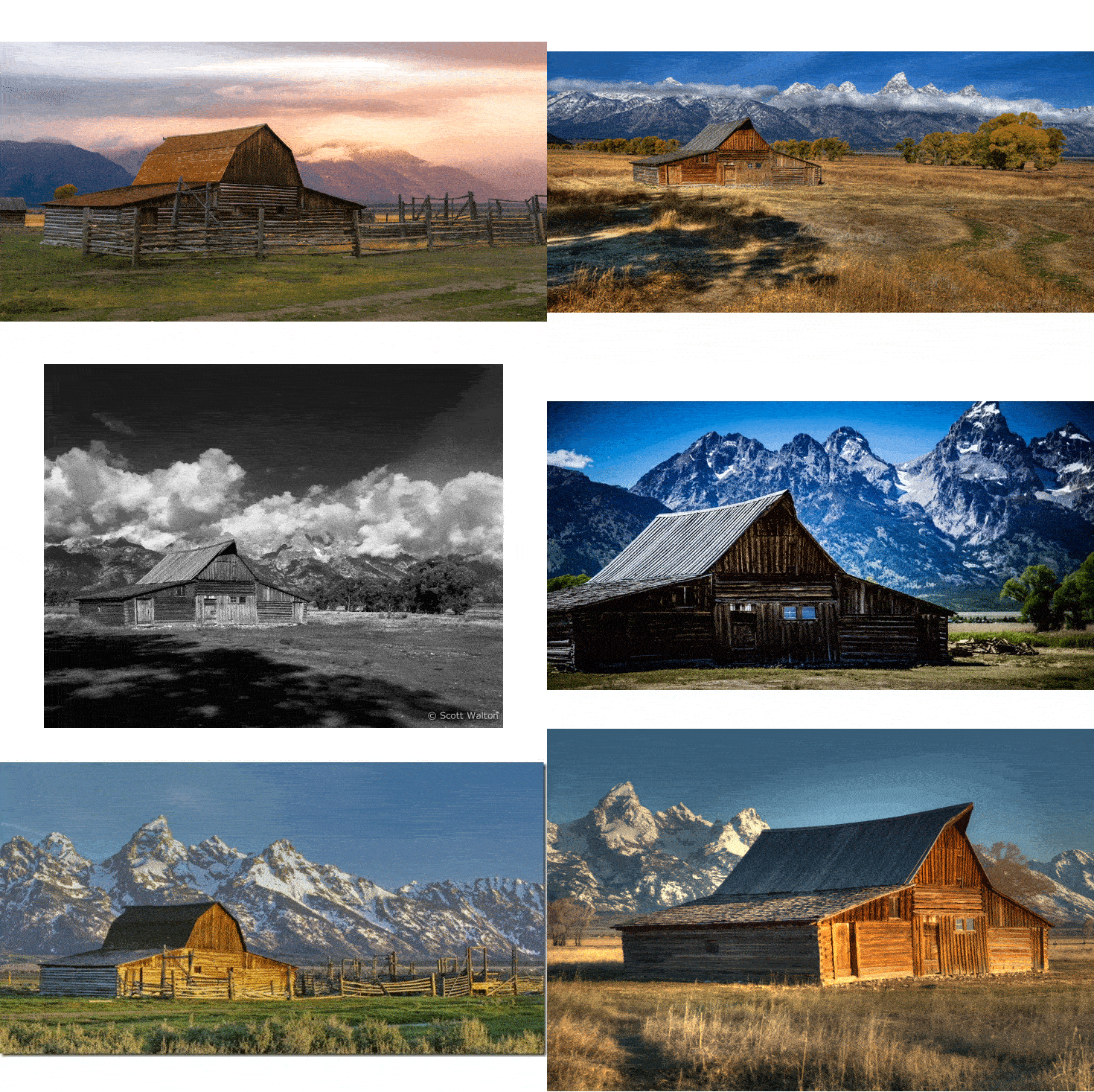
A 3D-printed model generated from 347 photographs found online. Photogrammetry reconstructs the tourist image of the T. A. Moulton Barn in Jackson Hole, Wyoming, including its gaps and glitches. Prompted by Don DeLillo’s White Noise, the project explores how repeated representation can shape what we see.
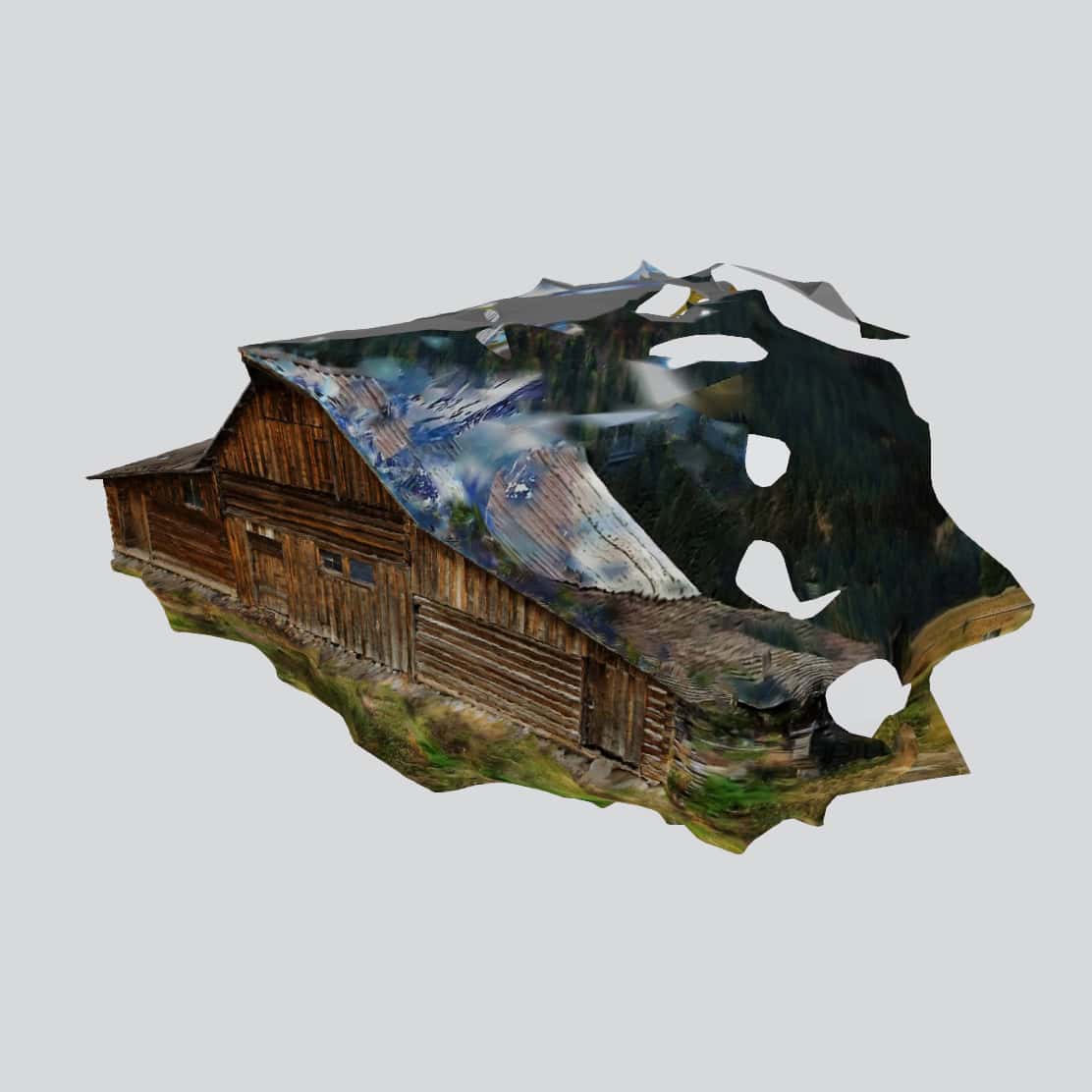
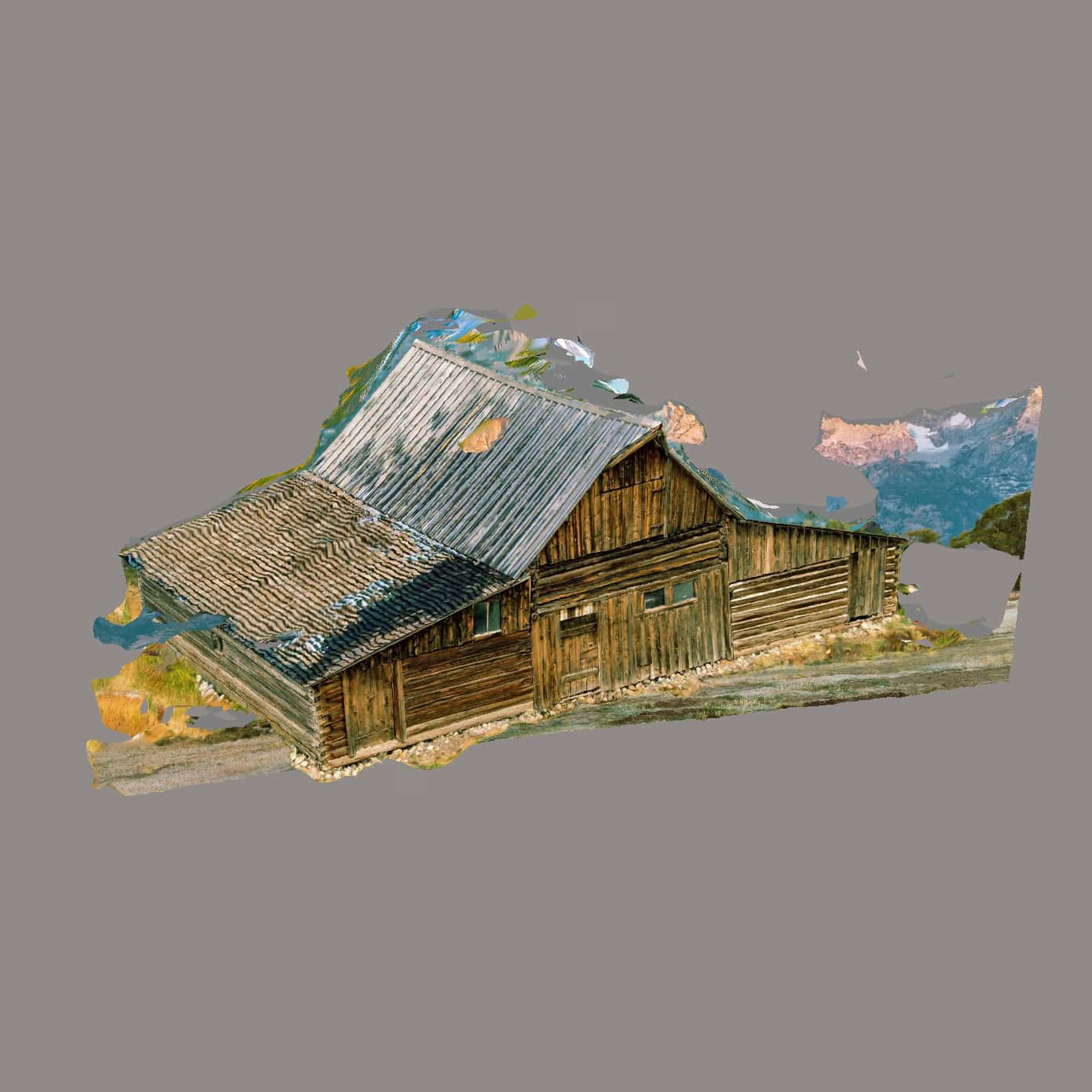
The software extrapolates three-dimensional form from a patchy set of two-dimensional photographs. The rotating model reveals the information it can reconstruct and the places where that reconstruction fails.
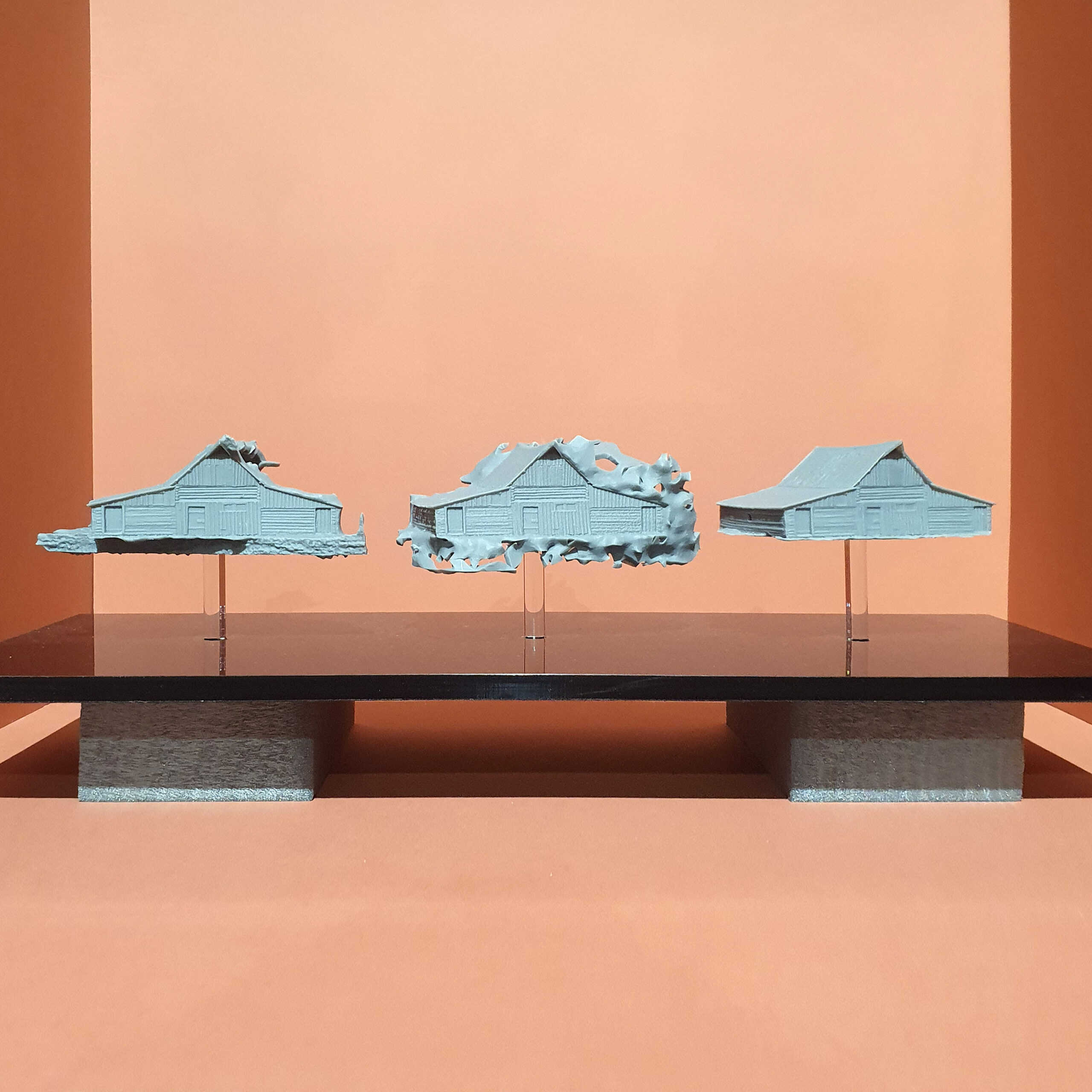
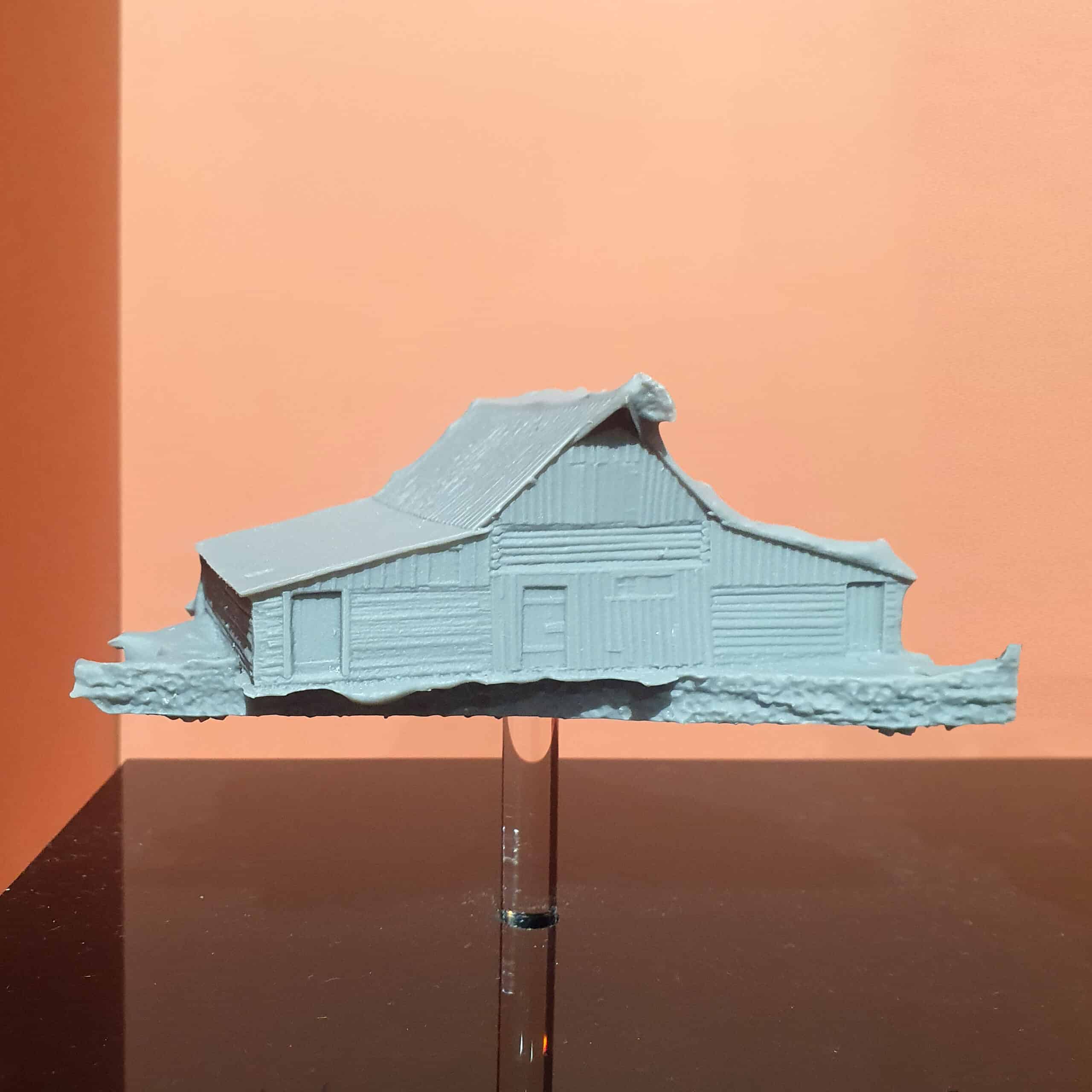
The printed models make the reconstructed record tangible. Their incomplete forms preserve the uneven coverage of the source photographs.
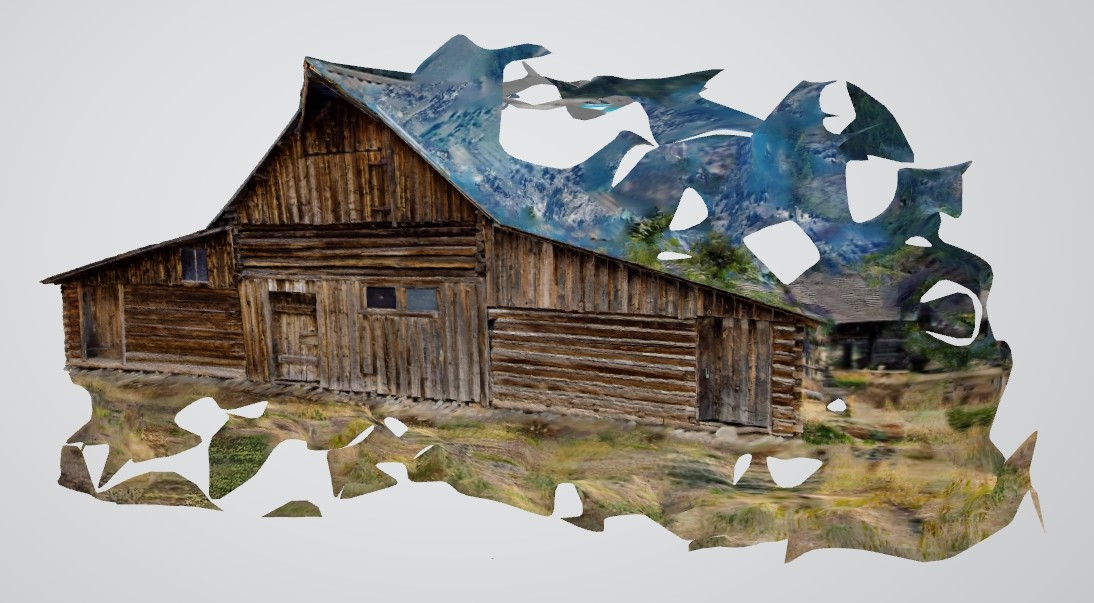
A digital model reveals holes and distortions where the photographs supply insufficient information. These gaps are part of the result, rather than defects to be repaired into an ideal barn.
A physical print turns the computed surface into a thing that can be viewed from different positions. It records a collection of images as much as an architectural structure.
Different parts of the barn are reconstructed with different degrees of certainty. The resulting surface maps the habits and limits of the tourist’s camera.
A textured digital reconstruction carries pieces of the surrounding landscape and sky with it. The gaps and fragments show where the photographic record fails to form a continuous object.
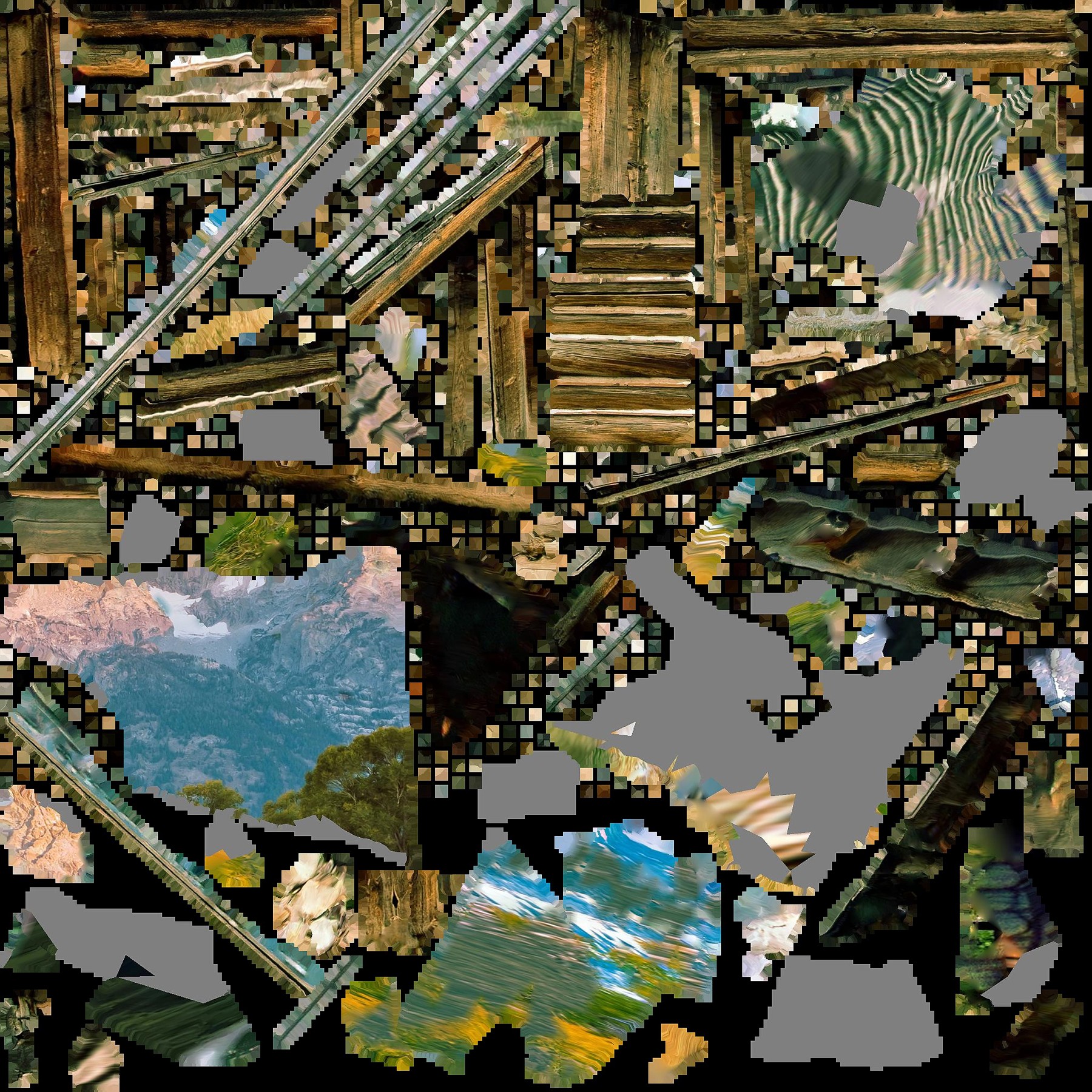
The photographic texture appears here as a flat map. Fragments of timber, roof, ground and sky occupy the same plane, recording the pieces from which the digital surface is assembled.